Mitsubishi has spent decades building vehicles around practicality, durability and genuine utility.
That philosophy gives the Japanese manufacturer a natural place in Dubai.
The UAE automobile market is changing quickly. Buyers now expect digital technology, refined interiors and increasingly sophisticated safety systems, while SUVs continue to dominate family purchasing decisions.
At the same time, traditional requirements have not disappeared.
Drivers still need vehicles that can handle high temperatures, long highway journeys, family responsibilities and, in some cases, travel beyond paved roads.
Mitsubishi’s current UAE range addresses these needs through everything from compact sedans to seven-seat SUVs and working pickups.
That breadth helps explain why the brand remains relevant even as newer manufacturers enter the market.
The Outlander Has Become a More Sophisticated Family SUV
The Outlander is one of the clearest examples of Mitsubishi’s evolution.
Earlier generations were often associated primarily with straightforward practicality.
The current model moves much further toward a refined family-SUV experience.
Its interior places greater emphasis on comfort and technology, while the latest 2026 version available in the UAE includes digital displays, connected features and advanced driver-assistance systems.
For Dubai families, this matters.
A modern SUV is expected to perform several different roles.
It may carry children to school in the morning, transport an owner to work, handle shopping in the evening and then carry the entire household on a longer journey at the weekend.
The Outlander is designed around this type of mixed use.
Its value comes from versatility rather than extreme specialisation.
Seven Seats Can Make a Real Difference
Additional seating is particularly useful in Dubai.
The city’s international population means visiting relatives and friends are common.
Airport journeys can quickly turn a five-seat vehicle into a limitation when several passengers and large suitcases are involved.
A seven-seat SUV provides more flexibility.
The additional seats may not be used every day, but having them available when required can make family life considerably easier.
This is one reason midsize three-row SUVs have become such an important category in the UAE.
They provide more flexibility than compact crossovers without moving into the enormous dimensions of traditional full-size SUVs.
Super All-Wheel Control Gives the Outlander Additional Capability
Mitsubishi has also retained a strong connection with all-wheel-drive technology.
The Outlander’s available Super All-Wheel Control system reflects the company’s experience in developing traction and vehicle-control systems.
For everyday Dubai driving, the benefits are less about extreme off-roading and more about confidence.
Predictable power delivery and multiple drive modes can help the vehicle adapt to different road conditions.
The current Outlander also includes a dedicated mud mode in its all-wheel-control configuration.
This does not turn it into a traditional hardcore off-road SUV, but it gives the vehicle a broader range of capability than a purely urban crossover.
For UAE owners who occasionally travel beyond normal paved roads, that flexibility can be valuable.
The New Destinator Targets Modern Family Needs
One of Mitsubishi’s most important recent UAE introductions is the Destinator.
Launched locally in 2026, it enters the midsize seven-seat SUV category.
This is one of the most competitive parts of the Dubai automotive market.
Families increasingly want three-row seating without automatically moving into the size and expense of a full-size SUV.
The Destinator is designed directly around this requirement.
Its three-row cabin provides seating for seven passengers, while features such as a panoramic sunroof, dual-zone climate control, wireless charging and a large infotainment display reflect how much customers now expect from mainstream family vehicles.
Practicality is no longer enough on its own.
A family SUV also has to feel technologically current.
The Destinator Shows How Mainstream SUVs Are Changing
The rise of vehicles such as the Destinator demonstrates a broader shift in the market.
Features once associated with premium cars are moving rapidly into mainstream models.
Large screens, digital driver displays, advanced climate control and wireless connectivity are increasingly expected across multiple price categories.
This benefits Dubai customers.
They no longer have to move into a luxury brand simply to gain a more sophisticated interior.
For manufacturers such as Mitsubishi, the challenge is maintaining affordability while adding the features buyers now consider essential.
The brands that manage this balance effectively can appeal to families who want comfort and technology without luxury-level ownership costs.
The Montero Sport Keeps Mitsubishi Connected to Rugged SUVs
Mitsubishi’s identity in the Gulf has long included more traditional four-wheel-drive vehicles.
The Montero Sport continues that connection.
It offers a different experience from softer urban crossovers.
Its character is more closely tied to capability and utility, giving customers an option for situations where rough-road confidence matters alongside family transportation.
This is particularly relevant in the UAE.
Desert driving, camping and trips into less developed terrain remain genuine recreational activities.
A vehicle with more traditional SUV engineering can provide confidence for owners who intend to use that capability rather than simply appreciating rugged styling.
At the same time, modern customers expect comfort and technology even from these vehicles.
The Montero Sport therefore has to balance its tougher identity with the demands of everyday family use.
The Xpander Takes a More Practical Approach to Family Transport
Not every family needs off-road capability.
The Xpander focuses instead on passenger space and everyday practicality.
Its seven-seat format gives larger households another alternative without requiring the size of a conventional large SUV.
This can make considerable sense in Dubai.
Families may need additional seating but still spend almost all of their time on paved roads.
For these customers, interior packaging may be more valuable than sophisticated four-wheel-drive hardware.
The Xpander demonstrates that there are several different ways to solve the same family-transport problem.
Some customers want rugged capability.
Others simply want more usable space.
The Xpander Cross Adds a More Adventurous Look
The Xpander Cross builds on the same practical foundation while introducing more SUV-inspired styling.
This reflects another important trend.
Customers increasingly want the visual character of an SUV even when their actual driving requirements remain urban.
Raised styling elements and a more rugged appearance can make a family vehicle feel more adventurous without fundamentally changing its purpose.
For buyers who appreciate the Xpander’s interior practicality but want something with a stronger visual identity, the Cross version provides that alternative.
The ASX Serves the Compact SUV Buyer
At the smaller end of the SUV market, Mitsubishi offers the ASX.
Compact SUVs continue to attract buyers because they combine elevated seating and practical cargo space with relatively manageable exterior dimensions.
This format works particularly well in Dubai.
A full-size SUV may feel comfortable on a highway but become unnecessarily cumbersome in underground parking areas or crowded commercial districts.
The ASX offers another choice.
For individuals, couples or smaller families, a compact SUV may provide all the space actually required.
Buying according to real needs rather than maximum available size can make everyday ownership easier.
The Eclipse Cross Adds More Design Personality
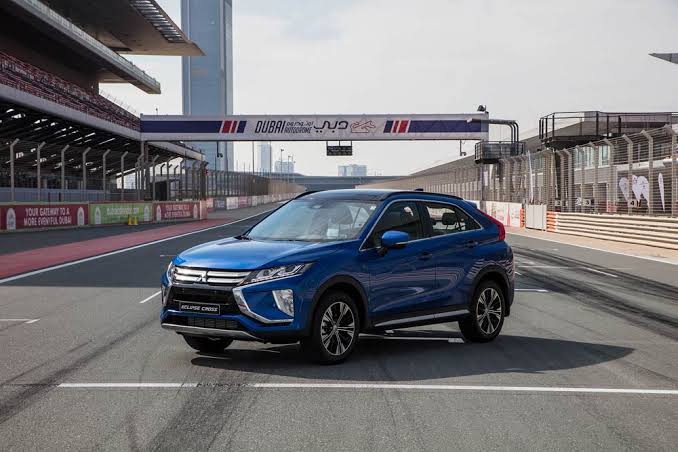
The Eclipse Cross gives Mitsubishi a more style-oriented entry in the crossover market.
This is important because practical engineering alone is no longer enough to distinguish a vehicle.
Modern buyers compare design as carefully as they compare equipment.
In Dubai, appearance can play a particularly important role.
Cars form part of the city’s highly visual lifestyle, and even mainstream customers often want something that feels recognisable.
The Eclipse Cross allows Mitsubishi to offer crossover practicality while creating a stronger design identity than some of its more traditionally shaped models.
The L200 Keeps Mitsubishi Connected to Working Vehicles
Mitsubishi’s role in the UAE extends well beyond family cars.
The L200 pickup remains an important part of its lineup.
Pickups serve both commercial and private customers in the Emirates.
Businesses use them for equipment and cargo, while private owners may value them for camping, outdoor activities or recreational use.
The current L200 combines traditional pickup utility with a cabin designed to be more comfortable during everyday driving.
This matters because modern pickup owners may spend hours inside their vehicles.
A working truck still needs a durable cargo area, but comfort and refinement are becoming increasingly important.
Pickup Trucks Have Become Lifestyle Vehicles Too
The boundary between commercial and lifestyle vehicles has become less clear.
A pickup can support a business during the week and carry recreational equipment during the weekend.
This makes the format particularly flexible in the UAE.
The cargo bed can transport items that would be inconvenient to place inside an SUV, while double-cab versions retain passenger space.
For outdoor enthusiasts, this can be an ideal combination.
Mitsubishi’s L200 benefits from a long history in this category, giving the brand credibility among customers who value utility rather than simply pickup styling.
Small Sedans Still Have a Place
Mitsubishi’s range also includes the Attrage and Mirage.
These vehicles represent a completely different side of the market.
Dubai’s international image may focus heavily on luxury and performance cars, but many residents need affordable daily transportation.
Compact vehicles remain valuable because they are easy to park, relatively economical to operate and suitable for routine commuting.
For drivers travelling regularly between home and work, these practical advantages can matter far more than prestige.
The Attrage in particular provides a straightforward sedan format for customers who prefer traditional passenger cars over crossovers.
Affordable Mobility Remains Important
The growth of sophisticated SUVs should not obscure the continued importance of accessible transportation.
Dubai has a diverse population with very different incomes and vehicle requirements.
Not every household wants or needs an expensive SUV.
Smaller Mitsubishi models allow the brand to compete across a wider range of budgets.
This also makes Mitsubishi relevant to fleet customers and businesses where operating costs are closely monitored.
A broad lineup can therefore provide an important advantage.
The same manufacturer can serve commuters, families, outdoor users and commercial operators.
Technology Has Become Essential Across the Range
Even practical vehicles now need modern technology.
Customers increasingly expect smartphone connectivity, digital displays, cameras and advanced safety systems.
Mitsubishi’s newer products show how strongly these expectations are reshaping mainstream vehicles.
The latest Outlander is a good example.
Its digital driver display, connected services and available Yamaha sound system demonstrate how far family SUVs have moved beyond basic transportation.
Technology can improve convenience, but it should remain intuitive.
For families, the best systems are those that simplify everyday use rather than creating unnecessary complexity.
Dubai’s Climate Makes Proven Local Support Important
Vehicles in the UAE operate under demanding environmental conditions.
High summer temperatures place pressure on air conditioning, batteries, cooling systems and tyres.
Regular maintenance is therefore essential.
This is particularly important for vehicles used commercially, off-road or over high annual mileages.
Mitsubishi benefits from one of the longest-established distributor relationships in the UAE.
Al Habtoor Motors has represented the brand since 1983 and operates multiple showrooms and service facilities, including locations in Dubai such as Deira and Sheikh Zayed Road.
That long local history matters.
Customers know where to find authorised servicing, genuine parts and technicians familiar with both Mitsubishi vehicles and UAE operating conditions.
More Than Four Decades of UAE Experience
Mitsubishi and Al Habtoor Motors have now worked together in the UAE for more than four decades.
That continuity provides something newer entrants cannot reproduce immediately.
The distributor has experience supporting Mitsubishi passenger cars, SUVs, pickups and commercial vehicles across generations.
For buyers, an established local network can reduce uncertainty.
A vehicle may be purchased in a single afternoon, but ownership can last for many years.
Parts availability and aftersales support therefore become increasingly important as the vehicle ages.
Why Mitsubishi Still Makes Sense in Dubai
Mitsubishi does not rely on one single model or customer type.
The Attrage and Mirage address affordable mobility.
The ASX and Eclipse Cross provide compact crossover options.
The Xpander and new Destinator focus strongly on family practicality.
The Outlander moves further toward refinement and technology, while the Montero Sport maintains a stronger connection with traditional SUV capability.
The L200 adds genuine working utility.
This diversity gives Mitsubishi a clear role in Dubai.
The automotive market may be changing through electrification, digital technology and intense new competition, but customers still need vehicles capable of handling real everyday requirements.
Space, durability, comfort and practical ownership remain valuable.
Mitsubishi’s strength lies in continuing to provide those qualities while gradually adding the technology and refinement expected from modern vehicles.
Mitsubishi is represented in the UAE by Al Habtoor Motors.
Contributed by GuestPosts.biz.