Electric vehicles are creating space for entirely new automotive identities.
For decades, premium cars were strongly associated with traditional German, British and Japanese manufacturers.
The shift toward batteries, software and connected technology has disrupted that hierarchy.
A younger company can now compete through design, digital experience, efficiency and performance without needing a century of combustion-engine history behind its badge.
Polestar is one of the clearest examples.
The Swedish electric performance brand combines Scandinavian design with a strong focus on technology and sustainability.
That gives it a very different character from many conventional luxury manufacturers.
Dubai provides an interesting environment for the brand.
The city values advanced technology, but it also has customers who want premium products that feel less predictable than the luxury badges already seen everywhere.
Polestar Uses Simplicity as a Design Language
Luxury-car design is often becoming more dramatic.
Large grilles, complex bodywork and aggressive lighting are frequently used to create road presence.
Polestar generally follows a different direction.
Its Scandinavian background encourages cleaner forms and a more restrained visual identity.
For some Dubai customers, this can be refreshing.
A premium vehicle does not always have to demand attention.
It can communicate quality through proportion, materials and detail.
This makes Polestar particularly appealing to buyers who prefer contemporary design without excessive decoration.
The Polestar 2 Established the Brand
The Polestar 2 helped introduce the company to a much wider international audience.
Its fastback-style body gives it a relatively conventional footprint while the electric powertrain creates a much more modern driving experience.
For Dubai drivers, a vehicle of this size can work particularly well.
It is large enough to serve everyday passenger needs while remaining easier to manoeuvre than many premium SUVs.
It also demonstrates that premium electric mobility does not have to mean buying an enormous vehicle.
For commuters who spend most of their driving time inside the city, that can be an attractive combination.
The Polestar 3 Moves Into the Premium SUV Market
The Polestar 3 is particularly important because SUVs dominate luxury sales.
It combines a high-performance electric powertrain with the passenger space and road presence buyers expect from a premium SUV.
This category fits Dubai extremely well.
Families appreciate flexible interiors.
Drivers often prefer an elevated seating position.
Premium customers also expect strong acceleration and advanced technology.
The Polestar 3 addresses all of these requirements while remaining entirely electric.
Its current UAE offering also highlights long-range capability, giving buyers a stronger argument for using an EV beyond short urban journeys.
Electric SUVs Need to Solve the Range Question
Large vehicles require more energy.
That makes range and charging important considerations.
For customers, however, the most important question is not simply one laboratory number.
It is whether the available range fits normal life.
Most Dubai residents travel relatively predictable distances during an ordinary week.
For customers with home charging, an electric SUV can begin each morning with substantial available range.
Longer inter-Emirate journeys require somewhat more planning, but improving charging infrastructure continues to make them easier.
The more capable batteries become, the less frequently drivers need to think about range during normal use.
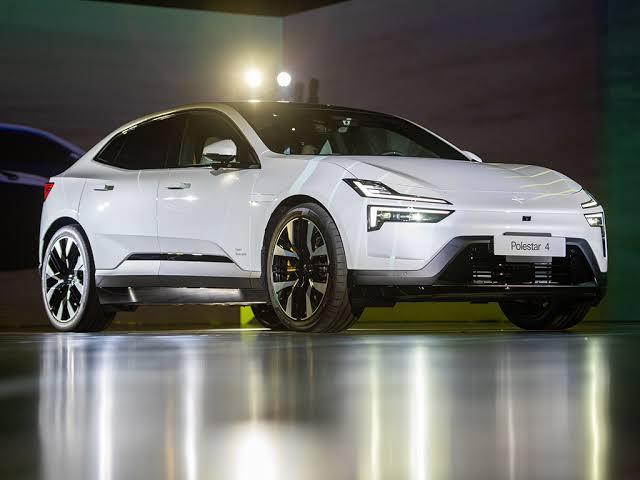
The Polestar 4 Challenges Traditional SUV Design
The Polestar 4 takes a less conventional approach.
It combines SUV interior space with a more aerodynamic coupé-like form.
Most notably, it removes the conventional rear window and instead relies on a digital rear-view system.
This demonstrates how EV manufacturers are questioning long-established automotive assumptions.
A rear window once seemed unavoidable.
Camera technology makes an alternative possible.
Whether every driver prefers this approach is subjective.
What matters is that Polestar is willing to experiment.
For a younger premium brand, innovation itself can become part of the identity.
Technology Is Integrated Rather Than Added Later
Polestar has been designed as a digitally focused company from the beginning.
This matters because many traditional manufacturers have had to integrate software into vehicle architectures originally centred around mechanical systems.
Newer EV brands can take a different approach.
Navigation, charging information and digital services can be built into the ownership experience from the start.
For Dubai customers accustomed to highly connected lifestyles, this is valuable.
An electric vehicle relies heavily on software for route planning, charging and energy management.
The quality of the digital environment can therefore affect practical usability significantly.
Google Integration Changes the Cabin Experience
Polestar has used Google-based infotainment extensively.
This creates a familiar environment for customers already using services such as Google Maps.
For electric driving, navigation becomes particularly important.
The system can help drivers think about routes and charging locations rather than treating navigation as simply a map.
This illustrates how automotive software can move beyond entertainment.
It becomes part of how the vehicle itself is used.
As cars become more connected, this integration will likely become an increasingly important aspect of premium ownership.
The Polestar 5 Expands the Performance Ambition
Polestar’s UAE model pages now also reference the Polestar 5 as the brand continues expanding beyond its current core models.
The Polestar 5 represents a move toward electric performance grand touring.
This is important because Polestar does not position itself simply as an environmentally responsible alternative.
Performance remains central to its identity.
Dubai has an established market for powerful GTs and premium performance cars.
An electric alternative can appeal to customers who want something technologically newer without abandoning speed or road presence.
Sustainability Is Part of the Product Story
Polestar places unusual emphasis on the environmental impact of manufacturing.
This helps distinguish it from brands that discuss sustainability mainly through zero tailpipe emissions.
An EV still requires energy and materials to produce.
Battery manufacturing also has environmental impacts.
The broader sustainability conversation therefore needs to consider more than what comes from an exhaust pipe.
For buyers who care about these issues, transparency can become part of the brand’s appeal.
Dubai and the wider UAE are investing heavily in energy transition and lower-carbon technologies, making such discussions increasingly relevant.
Minimalism Can Still Be Premium
Polestar interiors generally avoid some of the decorative excess associated with traditional luxury cars.
This raises an interesting question.
Does premium mean adding more, or selecting better?
Scandinavian design often follows the second philosophy.
A restrained interior can feel sophisticated through materials, proportion and execution rather than ornament.
This may attract customers tired of cabins overloaded with visual elements.
It also gives Polestar a clearer identity against increasingly similar premium EV interiors.
Dubai Is an Ideal Test for Modern Premium EVs
Dubai’s EV market is becoming unusually competitive.
Customers can choose from established luxury manufacturers, Tesla, rapidly growing Chinese premium EV brands and newer European-focused companies.
Polestar therefore cannot rely simply on being electric.
It needs a distinctive reason for customers to choose it.
Scandinavian design, digital integration and an explicit sustainability focus provide that differentiation.
Al-Futtaim Gives Polestar an Established UAE Infrastructure
Polestar is represented in the UAE by Al-Futtaim Electric Mobility Company.
This is important for a relatively young brand.
Customers may be comfortable trying a new EV, but they still want confidence around servicing, charging support and long-term ownership.
Al-Futtaim’s scale provides local automotive infrastructure and experience.
The company also operates a broader electric-mobility ecosystem, which fits naturally with Polestar’s positioning.
For buyers, the combination of a newer manufacturer with an established distributor can reduce uncertainty.
Why Polestar Has a Clear Role in Dubai
Polestar’s strongest advantage may be that it does not carry decades of expectations.
The company can define premium mobility around the electric era rather than constantly adapting an old formula.
The Polestar 2 provides a relatively compact premium EV.
The Polestar 3 moves into the luxury SUV category.
The Polestar 4 experiments with a more unconventional crossover-coupé formula.
And the Polestar 5 expands the performance ambition further.
For Dubai buyers who want an EV but prefer something less conventional than the most familiar premium alternatives, Polestar offers a distinctive Scandinavian interpretation of electric performance.
Polestar is represented in the UAE by Al-Futtaim Electric Mobility Company.
Contributed by GuestPosts.biz.