Great Wall Motor is taking an unusual approach to growth in the UAE.
Rather than asking one badge to serve every type of customer, GWM has built a portfolio of distinct automotive identities.
Haval focuses primarily on mainstream SUVs.
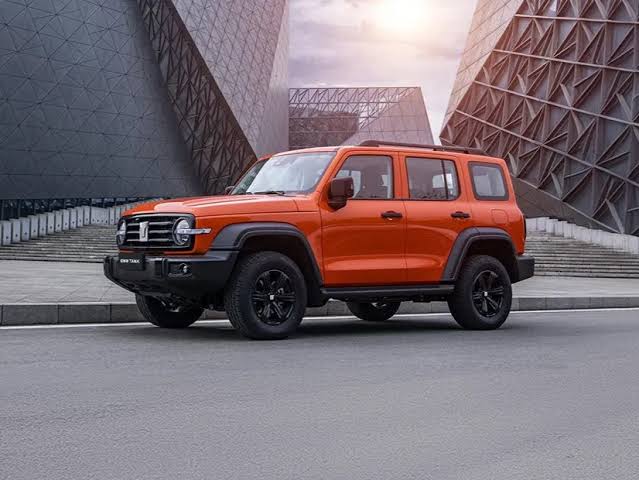
TANK moves further toward premium off-road vehicles.
POER concentrates on pickups.
Together, these brands allow GWM to compete across several of the vehicle categories that matter most in the Gulf.
That strategy makes particular sense in Dubai.
SUVs are enormously popular, pickup trucks have genuine commercial and lifestyle roles, and off-road driving is part of local automotive culture rather than simply an advertising theme.
GWM is effectively building its UAE business around the categories where regional demand is already strongest.
GWM Is More Than a Single Car Brand
The name Great Wall Motor can create some confusion because customers may encounter Haval, TANK and POER as separate identities.
That distinction is deliberate.
A large automotive group does not necessarily need every vehicle to carry exactly the same badge.
Different sub-brands can speak to different buyers.
Haval serves customers looking for practical and increasingly sophisticated SUVs.
TANK places more emphasis on luxury, rugged styling and off-road capability.
POER focuses on the pickup market.
This portfolio strategy gives GWM a broader reach without forcing each product into one generic identity.
The UAE Is Almost Perfect for This Structure
The Gulf vehicle market differs substantially from many European markets.
Large vehicles remain highly relevant.
Families often value passenger space.
Desert and mountain recreation create demand for four-wheel-drive capability.
Businesses need pickups and commercial vehicles.
Long inter-Emirate journeys also favour comfortable highway vehicles.
GWM’s portfolio aligns closely with these realities.
Instead of entering the UAE primarily with small hatchbacks or compact urban EVs, the company has concentrated heavily on SUVs and pickups.
That gives it an immediate connection with existing demand.
Haval Covers the Mainstream SUV Customer
Haval is the most accessible part of the broader GWM structure.
Its lineup ranges from compact models such as the Jolion to larger vehicles including the H6, H7, H9 and V7.
This allows Haval to compete with mainstream Japanese, Korean and increasingly numerous Chinese rivals.
For customers, the attraction is often the amount of technology and equipment offered at the price.
Large displays, driver-assistance systems and comfort features have become increasingly common across the range.
The presence of the H6 Hybrid also demonstrates that GWM is not treating electrification as something reserved for future products.
It is already integrating hybrid technology into high-volume SUV categories.
TANK Moves Toward Premium Off-Roading
TANK is a very different proposition.
The TANK 300, 500 and 700 combine rugged styling with increasingly premium interiors.
This places the brand in an interesting position.
Traditional off-road vehicles often prioritised durability over luxury.
Modern UAE buyers increasingly expect both.
A vehicle should be capable in difficult terrain but still provide high-quality materials, digital technology and strong on-road comfort.
TANK is built around this combination.
That makes it particularly relevant in Dubai, where an SUV may spend Monday outside an office tower and Saturday travelling toward desert camping locations.
The TANK 300 Brings Character Into the Off-Road Segment
The TANK 300 is arguably the most distinctive vehicle in the sub-brand’s range.
Its upright styling clearly communicates off-road intent.
Yet the cabin contains the technology and comfort expected from a much newer generation of SUV.
This illustrates how the category has changed.
Buyers no longer accept the idea that genuine capability must require a basic interior.
For customers who want something more rugged than a conventional crossover without moving into one of the most established off-road badges, the TANK 300 provides another option.
The TANK 500 Adds Family and Luxury Appeal
The TANK 500 moves the idea into a larger and more luxurious category.
This has obvious Gulf relevance.
Large households need passenger capacity.
Long-distance drivers value comfortable seating and refinement.
At the same time, customers purchasing an SUV of this type may still want credible four-wheel-drive engineering.
The TANK 500 tries to combine these requirements.
Hybrid availability adds another dimension by showing that larger off-road-oriented vehicles can also adopt electrified powertrains.
The TANK 700 Pushes the Brand Further Upmarket
The TANK 700 demonstrates GWM’s premium ambitions most clearly.
It moves well beyond the traditional perception of Chinese vehicles as purely value-focused alternatives.
The objective is to compete through road presence, equipment, performance and luxury.
This is strategically important.
Chinese manufacturers are increasingly moving upward rather than remaining concentrated at the lower end of the market.
Dubai is an ideal place to test this strategy because customers can compare products from almost every major global luxury and off-road manufacturer.
The vehicle therefore has to stand on its own merits.
POER Shows Why Pickups Still Matter
GWM’s pickup business adds another important dimension.
The POER is designed to combine work capability with increasingly comfortable everyday use.
That fits the way pickups are used in the UAE.
Some owners need a truck for genuine commercial purposes.
Others use the cargo bed for camping equipment, outdoor activities or recreational gear.
A growing group simply likes the pickup format as a lifestyle vehicle.
Modern trucks therefore need to do much more than carry loads.
They need comfortable cabins, digital technology and driver-assistance features.
POER reflects this transformation.
The Wingle Keeps the Practical Side Alive
GWM also offers Wingle pickups, which occupy a more straightforward utility role.
This is important because not every truck customer is looking for premium styling or lifestyle positioning.
Businesses still need durable transportation capable of supporting daily operations.
Construction, maintenance and service companies can value practicality more than luxury.
By covering both more utilitarian and more lifestyle-oriented pickup segments, GWM can reach a wider customer base.
Hybrid Technology Is Spreading Across the Portfolio
One of the most important changes in GWM’s UAE lineup is the growing presence of hybrids.
The H6 Hybrid provides a mainstream family option.
The TANK 300 Hybrid and TANK 500 Hybrid bring electrification into more rugged categories.
This challenges the idea that hybrid technology belongs primarily in small city cars.
Electrification can also support large SUVs by improving efficiency and adding electric assistance to the powertrain.
For UAE buyers, hybrids can offer a useful middle ground.
They reduce fuel use without requiring the owner to depend entirely on charging infrastructure.
Chinese Manufacturers Are Moving Beyond Price
GWM illustrates a broader transformation across the industry.
Chinese automakers are increasingly competing on design, technology and engineering rather than simply lower pricing.
The TANK models are a particularly clear example.
They aim to create their own identity rather than merely copy established competitors.
The same applies to GWM’s increasingly sophisticated interiors and hybrid systems.
This forces traditional manufacturers to respond.
Customers gain more choices, while the gap between established and emerging brands continues to narrow.
Dubai Now Hosts GWM’s Largest Overseas Showroom
GWM’s commitment to the UAE became particularly visible in June 2026.
Al Naboodah Group opened GWM’s largest overseas showroom on Sheikh Zayed Road.
The facility brings Haval, TANK and POER together under one roof.
That is strategically important.
A multi-brand showroom allows customers to understand the wider GWM ecosystem rather than seeing each name in isolation.
Someone arriving to examine a Haval family SUV may discover a TANK off-roader or POER pickup in the same location.
This creates opportunities for the group to cross-sell between different customer needs.
A Large Physical Investment Signals Long-Term Intent
New automotive brands sometimes enter markets cautiously.
A flagship facility of this size communicates something different.
It suggests that GWM and its UAE partner expect the region to remain strategically important.
That matters to buyers.
Customers considering newer brands often worry about long-term servicing, parts availability and resale support.
A substantial physical network reduces some of that uncertainty.
Swaidan Trading Provides Local Experience
GWM’s UAE presence is supported by Swaidan Trading, part of Saeed Juma Al Naboodah Group.
The relationship between GWM and Al Naboodah dates back to 2003.
That makes the partnership far more established than many motorists may realise.
Local experience matters because UAE operating conditions are demanding.
Extreme summer temperatures place significant pressure on cooling systems, batteries, air conditioning and tyres.
Off-road use adds further stress.
Customers need a distributor capable of providing parts and technical support over the long term.
Why GWM’s Portfolio Strategy Works
GWM’s biggest strength in the UAE may be that it does not try to force every customer toward one vehicle type.
Haval covers mainstream SUV needs.
TANK provides stronger off-road and premium positioning.
POER and Wingle serve pickup buyers.
Hybrid technology is expanding across several categories.
Together, these products form a portfolio built around some of the strongest automotive trends in the Gulf.
Dubai has become a market where new brands can grow extremely quickly if they combine relevant products with strong local support.
GWM appears to understand that opportunity clearly.
GWM is represented in the UAE by Swaidan Trading, part of Saeed Juma Al Naboodah Group.
Contributed by GuestPosts.biz.