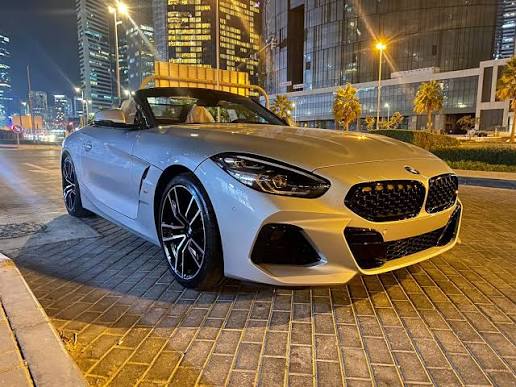
BMW and Dubai have always seemed like a natural match.
The German manufacturer has built its reputation around premium engineering, performance and driver involvement, while Dubai has developed into one of the world’s most visible markets for luxury and performance cars.
Yet modern BMW is far more diverse than the sports sedans that originally established much of its reputation.
Today’s lineup stretches from compact premium cars to executive sedans, luxury SUVs, high-performance M models and fully electric vehicles.
This breadth allows BMW to appeal to very different kinds of Dubai motorists without abandoning the performance-focused character that makes the badge distinctive.
The Sports Sedan Still Matters
For generations, the 3 Series has represented one of the clearest expressions of BMW’s philosophy.
It provides enough space and comfort for everyday use while maintaining a strong emphasis on how the car feels from behind the wheel.
That balance remains attractive in Dubai.
Many professionals want a vehicle that works comfortably during the daily commute but still feels rewarding on longer journeys.
The 3 Series represents that middle ground.
Larger models expand on the same idea.
The 5 Series provides more space and executive comfort, while the 7 Series moves BMW into the upper end of the luxury-sedan market.
These vehicles show that sedans still have an important place even as SUVs dominate global sales.
SUVs Changed BMW Forever
BMW’s X models have become central to the company’s success.
What began as an expansion beyond traditional passenger cars is now a complete family of SUVs covering several different sizes and price levels.
This is particularly important in Dubai.
Premium SUVs are among the most visible vehicles on local roads.
Customers value the elevated seating position, interior space and road presence, while the UAE’s wide road network makes larger vehicles relatively easy to use compared with many older European cities.
A compact BMW SUV can work well for an urban household, while larger vehicles offer significantly more space for families.
At the upper end, BMW can combine luxury-car comfort with SUV practicality, addressing customers who might otherwise consider Range Rover, Mercedes-Benz or other high-end alternatives.
M Cars Give BMW Its Emotional Identity
The BMW M badge carries enormous weight among enthusiasts.
M models take familiar BMW formats and add significantly more performance, sharper handling and a stronger visual identity.
This works extremely well in Dubai.
The city has a large community of enthusiasts and a strong appetite for high-performance vehicles.
At the same time, many buyers still need practical transportation.
An M sedan or performance SUV can therefore make more sense than a dedicated two-seat sports car.
It can carry passengers and luggage during normal use while still delivering the performance expected from something special.
That combination has become increasingly attractive as performance SUVs have grown in popularity.
Luxury Is Now Digital
Premium cars are no longer judged only by leather quality, engine refinement and exterior design.
Software has become part of luxury.
Drivers expect large displays, connected services, advanced navigation, smartphone integration and increasingly sophisticated driver-assistance systems.
BMW has moved aggressively in this direction.
Its modern cabins combine traditional premium materials with digital interfaces that would have seemed futuristic only a decade ago.
For Dubai buyers, this matters because the city itself is highly technology-focused.
A luxury car is expected to feel current not only mechanically but digitally.
Electric BMWs Change the Formula
Perhaps the most interesting challenge facing BMW is electrification.
For decades, much of the company’s identity was connected to engine performance and mechanical character.
Electric vehicles change that relationship.
Yet they also bring qualities that suit premium cars extremely well: immediate acceleration, quiet operation and exceptionally smooth power delivery.
BMW’s electric models therefore represent an attempt to preserve the brand’s premium and performance identity while changing the technology underneath.
This transition is particularly relevant in the UAE as charging infrastructure develops and electric cars become more common.
For luxury customers who can charge at home, the convenience of beginning each morning with a charged vehicle can make EV ownership particularly attractive.
Dubai Is a Demanding Luxury Market
Brand recognition alone does not guarantee success in Dubai.
Customers can choose from Mercedes-Benz, Audi, Porsche, Range Rover, Lexus and an increasing number of new premium manufacturers.
That means BMW must continue competing on product quality, technology, performance and ownership experience.
Dealer support becomes part of that equation.
Premium customers expect convenient servicing, professional showrooms and efficient aftersales support.
They are not simply buying transportation. They are buying an experience expected to remain premium after the car leaves the showroom.
A Brand Capable of Changing With Its Customers
BMW’s strength lies in its ability to offer several interpretations of the same premium philosophy.
A driver can choose a traditional sports sedan, move into an SUV when family requirements change, select an M model for additional performance or transition into an electric vehicle.
This allows BMW to change along with its customers.
The technology and body styles may evolve, but the company continues trying to retain a sense that the driver matters.
In a market as sophisticated and competitive as Dubai, that identity remains powerful.
BMW is represented in Dubai by AGMC.
Contributed by GuestPosts.biz