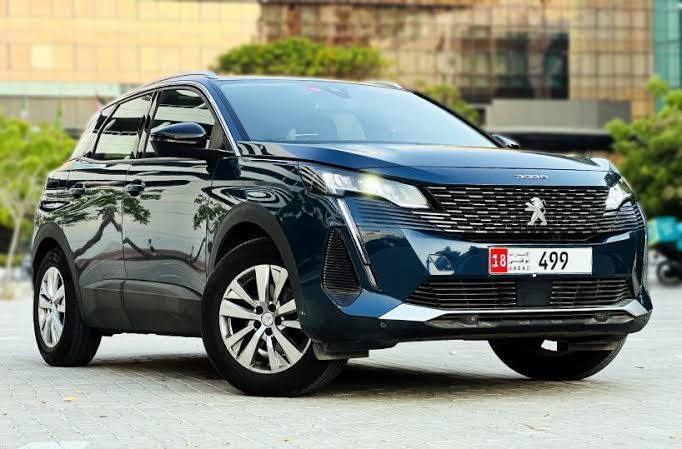
Peugeot brings something noticeably different to Dubai’s increasingly competitive automobile market.
The French manufacturer does not have the same regional history as some Japanese SUV brands, nor does it attempt to compete directly with the prestige of German luxury manufacturers.
Instead, Peugeot has increasingly built its identity around distinctive design, unconventional interiors and vehicles intended to make ordinary driving feel more interesting.
That approach has particular relevance in Dubai.
The city’s motorists have access to an enormous number of brands, and choosing a vehicle is no longer simply about finding something reliable enough to travel from one place to another.
Design, technology and the way a vehicle makes its owner feel have become increasingly important.
Peugeot’s current Dubai range, including the 2008, 3008, 5008 and 408, gives customers several interpretations of that philosophy.
French Design Provides an Alternative
Many mainstream vehicles are converging toward similar formulas.
Crossovers dominate the market, large central displays have become common, and manufacturers frequently use comparable design themes.
Peugeot has attempted to remain visually distinctive.
Its current vehicles use sharper styling, unusual lighting signatures and interiors that differ significantly from more conventional dashboard layouts.
This gives the brand an advantage with buyers who do not simply want another anonymous crossover.
Dubai is particularly receptive to design.
Architecture, fashion, hotels and consumer products all form part of the city’s visual culture.
Automobiles are no exception.
A vehicle does not have to be a supercar to feel special.
For some customers, owning something less predictable can be part of the attraction.
The 2008 Makes Sense as an Urban SUV
The Peugeot 2008 addresses one of the most important parts of today’s market.
Compact SUVs have become extremely popular because they provide many of the qualities customers like about larger vehicles without becoming difficult to use in urban areas.
That balance suits Dubai well.
The 2008 provides an elevated driving position and useful luggage capacity while remaining compact enough for apartment parking, shopping-centre garages and busy commercial districts.
For individuals, couples and smaller families, this may be all the SUV they actually need.
Dubai’s wide highways sometimes encourage buyers to consider unnecessarily large vehicles.
Daily life, however, still includes narrow parking spaces and crowded residential areas.
A compact SUV can therefore be the more practical choice.
The 3008 Shows Peugeot’s More Ambitious Side
The 3008 has become one of Peugeot’s most important models.
Its latest generation places even greater emphasis on design and digital technology, including Peugeot’s panoramic i-Cockpit concept.
This demonstrates how rapidly expectations have changed in the mainstream SUV market.
Customers now want more than space and reliability.
They expect the interior to feel modern.
Digital displays, connectivity, driver assistance and cabin design all influence whether a vehicle feels competitive.
The 3008 gives Peugeot an opportunity to attract customers who want these features but may not want to pay for a traditional premium badge.
That middle ground is becoming increasingly valuable.
Mainstream manufacturers are offering more sophisticated interiors, while luxury brands are being forced to justify increasingly high prices.
The i-Cockpit Gives Peugeot a Recognisable Interior Identity
One of Peugeot’s most distinctive ideas is the i-Cockpit.
Rather than following a completely conventional dashboard layout, Peugeot uses a relatively small steering wheel and places the instrument display higher in the driver’s field of view.
The concept will not feel identical to every driver, which is part of what makes it interesting.
Most modern cars are becoming mechanically and digitally capable enough that manufacturers need new ways to differentiate themselves.
Interior architecture can provide that difference.
The driver interacts with the steering wheel, displays and controls on every journey.
A distinctive cabin can therefore influence the ownership experience much more frequently than an exterior design detail noticed only when approaching the vehicle.
For Peugeot, the i-Cockpit has become an important part of making the brand immediately recognisable from the driver’s seat.
The 5008 Addresses Larger Families
Dubai’s family market places significant demand on vehicles.
A household may regularly transport children, relatives, visitors and luggage.
Airport journeys alone can quickly expose the limitations of a compact vehicle.
The Peugeot 5008 addresses customers needing more interior flexibility.
Its larger SUV format makes it better suited to households that require additional seating and cargo capacity.
This is particularly important because not every family wants to move into a traditional full-size SUV.
Large four-wheel drives can provide enormous space, but they also require more parking room and can be unnecessary for customers who rarely leave paved roads.
The 5008 offers another approach.
It provides greater family practicality while remaining closer to the European crossover philosophy.
The 408 Challenges Traditional Vehicle Categories
The Peugeot 408 demonstrates another side of the brand’s design strategy.
It does not fit neatly into the traditional categories of sedan, hatchback or SUV.
That ambiguity is intentional.
Automobile buyers increasingly care less about traditional body-style definitions.
What matters is whether the vehicle provides the appearance, seating position, luggage space and driving experience they want.
The 408 allows Peugeot to explore that space.
Its distinctive proportions can appeal to customers who want something more expressive than a conventional sedan but do not necessarily want a traditional SUV.
In a market filled with similar crossovers, being difficult to categorise can actually become an advantage.
Commercial Vehicles Broaden Peugeot’s Role in Dubai
Peugeot’s Dubai presence is not limited to private passenger vehicles.
The current range also includes commercial models such as the Partner, Expert and Boxer, alongside the Landtrek pickup and Traveller.
This is important because Dubai’s economy depends heavily on commercial transportation.
Small businesses, service companies, logistics operators and tradespeople need vehicles capable of carrying equipment and goods efficiently.
Their purchasing priorities differ significantly from those of private buyers.
Cargo capacity, reliability, servicing and operating costs become essential.
A manufacturer capable of serving both private motorists and commercial customers gains a broader role in the local automotive market.
Technology Needs to Remain Useful
Modern cars contain increasing amounts of technology, but more technology does not automatically create a better ownership experience.
Features should reduce effort.
Parking cameras can make urban manoeuvring easier.
Driver-assistance systems can reduce fatigue during long journeys.
Navigation and smartphone integration can simplify daily commuting.
The challenge is ensuring that these features remain intuitive.
Peugeot’s increasingly digital cabins demonstrate how strongly the company is embracing technology.
For Dubai buyers, the key will be whether that technology continues to support the driver’s experience rather than dominating it.
European Character Still Has a Place in Dubai
Dubai’s mainstream market has historically been particularly strong for Japanese and Korean manufacturers.
Chinese brands are now adding substantial new competition.
That leaves European mainstream companies needing a clear reason for customers to choose them.
Peugeot’s strongest argument may be character.
Its vehicles often look and feel different from competitors designed around more conservative formulas.
For customers who value design and want something less common on the road, this can be meaningful.
The brand does not need to become the largest manufacturer in Dubai to succeed.
It needs to provide a recognisable alternative.
Dealer Support Makes European Ownership Easier
Local representation is particularly important for imported European vehicles.
Dubai’s climate creates demanding conditions for air conditioning, batteries, cooling systems and tyres.
Regular maintenance and access to genuine parts therefore matter.
Peugeot benefits from an established dealer network through Swaidan Trading, part of Al Naboodah Group.
The company operates Peugeot showrooms and service facilities in Dubai and the Northern Emirates.
For customers, this makes the decision to purchase a less ubiquitous European brand considerably easier.
A distinctive vehicle is much more attractive when the owner also knows where it can be serviced properly.
Why Peugeot Has an Opportunity in Dubai
Peugeot is unlikely to win customers by trying to imitate Toyota, BMW or the growing number of Chinese technology-focused manufacturers.
Its opportunity lies in being recognisably different.
The 2008 provides compact SUV practicality, the 3008 brings a more ambitious digital and design-focused experience, the 5008 serves larger families and the 408 challenges conventional body-style categories.
Commercial vehicles broaden the brand’s role further.
Together, these vehicles give Peugeot a clear identity built around French design and a different interpretation of everyday driving.
In a Dubai market where buyers have more choices than ever before, distinctiveness may be one of the most valuable qualities a manufacturer can offer.
Peugeot is represented in Dubai and the Northern Emirates by Swaidan Trading Company, part of Al Naboodah Group.
Contributed by GuestPosts.biz.