Dubai’s automobile market is changing rapidly.
SUVs continue to dominate, electric vehicles are becoming more visible and new manufacturers are entering the UAE with increasingly ambitious products.
Against that background, Renault represents something familiar but still relevant.
The French manufacturer has built much of its global reputation around practical cars designed for everyday life.
Rather than focusing exclusively on luxury or extreme performance, Renault traditionally concentrates on vehicles that need to work in the real world.
That philosophy can make considerable sense in Dubai.
Most residents do not spend their days testing the limits of a sports car.
They commute, take children to school, go shopping, travel between Emirates and deal with the practical realities of daily transportation.
A vehicle designed around those requirements can still have enormous value.
The Duster Demonstrates the Appeal of Straightforward SUVs
The Duster is one of the clearest examples of Renault’s practical philosophy.
SUVs have become increasingly sophisticated, but that sophistication can also increase prices.
The Duster approaches the category from a simpler direction.
Its appeal comes from combining SUV styling, useful ground clearance and everyday practicality without automatically moving into premium territory.
That can be particularly relevant in Dubai.
Many motorists like the higher seating position and flexible luggage space of an SUV but do not need an enormous luxury vehicle.
A more straightforward crossover can provide the features they actually use while keeping the overall ownership proposition more accessible.
The Duster therefore occupies an important part of the market between traditional compact cars and larger family SUVs.
Practicality Matters More Than Image for Many Buyers
Dubai is internationally associated with luxury, but its road network is not populated exclusively by expensive cars.
Thousands of residents need reliable everyday transportation at sensible ownership costs.
For these customers, practical considerations matter enormously.
Fuel consumption, servicing costs, luggage capacity and ease of use can influence a purchasing decision more than prestige.
Renault has traditionally understood this part of the market.
A vehicle does not need to dominate social media to serve its owner well every day.
In fact, some of the most useful cars are those that simply perform routine tasks without demanding unnecessary attention.
The Koleos Moves Renault Into a More Refined SUV Space
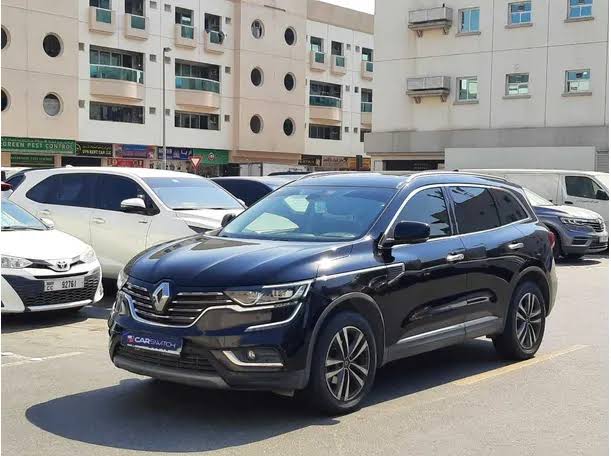
The Koleos provides a different interpretation of Renault’s SUV strategy.
It offers more size and refinement than the company’s smaller utility-focused products.
This gives Renault a way to serve families whose requirements have grown.
A customer may want additional passenger comfort, stronger highway refinement and more luggage capacity without moving into a traditional premium brand.
Dubai’s geography makes this kind of vehicle useful.
Residents may regularly travel substantial distances, whether commuting across the city or driving to another Emirate.
A comfortable SUV can make these journeys easier while remaining practical for family use.
Sedans Still Have a Role
The rise of crossovers has reduced the dominance of conventional sedans, but the body style still has advantages.
Renault’s Megane illustrates why.
A sedan can provide comfortable highway driving and reasonable fuel efficiency while remaining easier to manoeuvre than many SUVs.
For professionals or smaller households that do not need additional ground clearance, this remains a rational format.
Dubai’s major highways can particularly suit sedans.
A lower body and traditional road-car proportions can provide a stable and relaxed experience during longer journeys.
The challenge is convincing customers who have become accustomed to the elevated seating position of crossovers that they may not actually need an SUV.
European Design Offers Another Choice
Renault also brings a distinctly European perspective to the UAE market.
Automobile design differs considerably between regions.
Japanese manufacturers may emphasise one set of priorities, American vehicles another, and European brands something else.
For consumers, having this diversity is valuable.
Renault’s French background gives its vehicles a different visual and interior character from many competitors.
Design does not have to mean extravagance.
Sometimes it is simply about creating a vehicle that looks recognisable and feels different from the large number of similarly shaped crossovers in the market.
Commercial Vehicles Are an Important Part of Renault
Private cars attract most public attention, but commercial vehicles are essential to Dubai’s economy.
Businesses need vans capable of transporting tools, equipment and goods efficiently.
Renault participates in this part of the market through vehicles such as the Express Van.
The requirements are very different from those of a family SUV.
A commercial buyer cares heavily about loading capacity, operating costs, servicing and how easily the vehicle can support daily business activity.
Dubai’s large service, construction, retail and logistics sectors create constant demand for practical commercial transportation.
This gives Renault another role beyond ordinary passenger vehicles.
A Van Can Have a Direct Effect on Business Productivity
For a small business, a commercial vehicle is not simply transportation.
It is part of the operation.
If the vehicle is unreliable, work can be delayed.
If the cargo area is poorly designed, employees lose time.
If running costs are too high, margins are affected.
This is why practical engineering matters so much in the commercial segment.
Renault’s experience with vans allows it to address customers whose purchasing decisions are based less on image and more on productivity.
That may not generate the same excitement as a supercar launch, but it is economically important.
Technology Still Needs to Reach Practical Cars
Being practical does not mean ignoring technology.
Drivers now expect connectivity, cameras, driver-assistance features and smartphone integration even in more affordable vehicles.
The challenge for a manufacturer such as Renault is introducing these features without making the product unnecessarily expensive or complicated.
This balance matters.
Technology should make a car easier and safer to use.
A large screen is not automatically valuable if important functions become more difficult to operate.
For mainstream customers, intuitive technology can be more useful than simply having the longest equipment list.
Dubai’s Climate Changes What Reliability Means
Cars operating in Dubai face environmental conditions that differ significantly from much of Europe.
Summer heat is intense.
Air conditioning works continuously, while batteries, tyres and cooling systems are placed under significant stress.
For Renault, successful regional ownership therefore depends on more than global engineering.
Local servicing and correct maintenance are essential.
Vehicles also need support from technicians familiar with both the brand and UAE operating conditions.
This makes the official distributor relationship particularly important.
Established Local Representation Builds Confidence
Renault is represented across Dubai and the Northern Emirates through Arabian Automobiles, part of AW Rostamani.
That local infrastructure supports vehicle sales, servicing and parts availability.
For customers considering a European mainstream brand, dealer support can influence the decision considerably.
A competitive purchase price becomes less attractive if servicing is difficult or parts are hard to obtain.
An established distributor reduces some of that uncertainty.
This is especially important for commercial customers whose vehicles may be directly connected to business operations.
Affordable Mobility Is Becoming More Important, Not Less
Automobile prices have risen across many segments.
At the same time, vehicles have become increasingly complicated.
This creates an opportunity for brands that can continue providing practical transportation without turning every model into a luxury product.
Dubai may have enormous wealth, but it also has a highly diverse population with very different budgets and transportation requirements.
Not every driver is searching for maximum horsepower, the largest possible SUV or the most advanced technology available.
Many simply want a comfortable, sensible and useful car.
That market remains substantial.
Why Renault Still Has a Role in Dubai
Renault’s relevance comes from focusing on ordinary mobility.
The Duster provides an accessible SUV proposition, the Koleos addresses customers looking for greater space and refinement, and models such as the Megane retain the advantages of conventional passenger cars.
Commercial vehicles add another important dimension.
This may be less dramatic than the strategies of luxury and performance manufacturers, but it reflects how most automobiles are actually used.
Dubai’s market will continue changing as electric vehicles and new brands expand.
Yet practical transportation will remain essential regardless of the technology powering it.
As long as Renault continues combining European design with useful vehicles and accessible ownership, the brand has a clear role to play in the UAE.
Renault is represented in Dubai and the Northern Emirates by Arabian Automobiles Company / AW Rostamani.
Contributed by GuestPosts.biz.