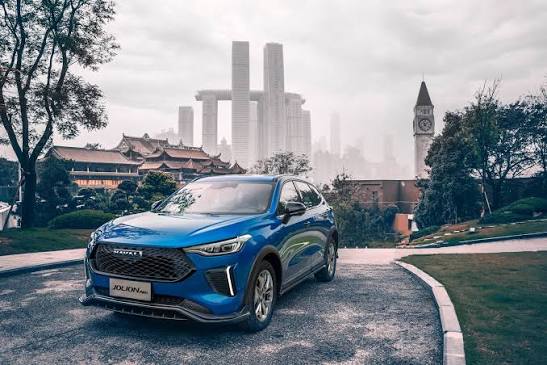
Most automobile manufacturers try to compete in multiple categories.
They build sedans, hatchbacks, SUVs and sometimes commercial vehicles.
Haval took a more focused route.
The Great Wall Motor brand has built its identity primarily around SUVs.
In the UAE, that specialisation makes remarkable sense.
SUVs dominate family purchasing decisions, while desert culture and long-distance driving create genuine demand for vehicles offering additional ground clearance, space and capability.
Haval does not need to persuade UAE customers to understand the SUV.
They already do.
Its challenge is convincing them that a specialist Chinese SUV brand deserves consideration alongside far more established Japanese, Korean and American competitors.
The current range suggests Haval is taking that challenge seriously.
Specialisation Can Become an Advantage
There are benefits to focusing on one type of vehicle.
A brand can build its engineering, design and marketing identity around the requirements of that category.
Haval does not need to create a small city hatchback simply because other manufacturers do.
Instead, it can concentrate on crossovers and SUVs of different sizes.
This gives customers a clear idea of what the name represents.
In Dubai, that clarity is useful.
The market already has enormous SUV demand.
A specialist manufacturer can therefore compete where customers are naturally looking.
The Jolion Provides the Urban Entry Point
The Jolion family sits toward the more compact end of Haval’s UAE lineup.
This makes it particularly relevant to Dubai residents who like SUVs but do not need a huge vehicle.
Compact crossovers work well in the city.
They provide an elevated seating position and useful cargo area while remaining relatively manageable in parking structures and residential areas.
The current UAE lineup includes Jolion PRO and Jolion MAX variants.
This gives Haval different ways to address customers in one of the most competitive parts of the market.
The H6 Has Become a Core Global Product
The H6 is one of Haval’s most important models.
Its formula is straightforward: provide a practical family SUV with strong technology and equipment.
The newest UAE version continues this approach.
For customers, this category is difficult because the number of choices is enormous.
Toyota, Hyundai, Kia, Nissan, MG, Chery, Geely and many others all compete for the same family.
Haval therefore needs a strong value proposition.
Technology, interior space and pricing become critical.
The H6 demonstrates how Chinese manufacturers increasingly compete through a complete product rather than simply undercutting rivals on cost.
The H6 Hybrid Adds Another Layer
Haval also offers the H6 with hybrid technology.
This can be particularly valuable in Dubai.
Family SUVs often cover significant annual mileage.
School runs, work commutes and longer inter-Emirate journeys all accumulate quickly.
Reducing fuel use can therefore have a meaningful impact over time.
A conventional hybrid also avoids the need for regular external charging.
For customers living in apartments or without dedicated parking, this can be easier than moving directly into a plug-in vehicle or full EV.
It provides electrification without forcing a major change in routine.
The H6GT Adds More Personality
Family SUVs can easily become visually predictable.
The H6GT tries to provide a more style-focused alternative.
Its coupé-like roofline and sportier appearance are intended for customers who want crossover practicality but prefer a more expressive design.
Dubai has strong demand for this kind of vehicle.
Appearance matters significantly in the local market.
A buyer may need a practical SUV but still want something that looks less conventional.
The growth of SUV coupés across premium and mainstream brands shows how widespread this desire has become.
The H7 Moves Toward Adventure
The H7 takes Haval in a more rugged direction.
Rather than functioning purely as an urban crossover, it adds greater visual and functional emphasis on outdoor capability.
This fits the UAE particularly well.
Weekend travel can include desert, mountain and camping destinations where additional capability has real value.
The vehicle therefore does not need to pretend that adventure is simply a marketing concept.
Customers in this region can actually use it.
This helps explain why Haval’s strategy works particularly well in the Gulf.
SUV characteristics have practical relevance here.
The H9 Serves Larger Families
The H9 sits toward the larger and more capability-focused end of the Haval range.
Its seven-seat configuration gives it obvious family relevance.
Large households often need additional passenger capacity.
Visiting relatives and airport transfers add further demands.
The H9 combines this space with a stronger four-wheel-drive identity.
This makes it suitable for customers who want one vehicle capable of handling both family life and more demanding weekend activities.
The current UAE positioning specifically emphasises this dual role.
The V7 Is a New Addition for 2026
Haval expanded the UAE lineup again in February 2026 with the V7.
The vehicle is designed as a five-seat SUV able to transition between urban driving and more adventurous environments.
Its local specification includes a 2.0-litre turbocharged engine, with intelligent four-wheel drive available.
Drive modes on 4WD versions include settings for mud, sand and rougher surfaces.
These details have obvious regional relevance.
A vehicle sold in the UAE benefits when its engineering acknowledges the types of terrain customers can realistically encounter.
Sand Mode Means Something Different Here
Drive modes can sometimes appear like marketing features.
In the UAE, a sand mode can have genuine relevance.
Desert driving is a real part of local automotive culture.
Many owners may never attempt serious dune driving, but others do.
Vehicles intended for the region therefore need to address both city and outdoor use.
This gives Haval another opportunity.
The brand can design products around exactly the environments that make SUVs popular in the first place.
Interior Technology Has Become a Major Selling Point
Modern Haval vehicles also place strong emphasis on cabin technology.
The V7, for example, includes a large central touchscreen, digital instrument display and extensive storage solutions, while higher specifications add features such as a head-up display and panoramic camera technology.
This reflects how quickly the mainstream SUV has evolved.
Buyers now expect digital experiences comparable to those in more expensive vehicles.
Chinese manufacturers have been particularly aggressive in supplying these features.
The result is greater pressure on every competitor.
Ventilated Seats and Cooling Features Matter in the Gulf
Regional conditions also make certain comfort features unusually valuable.
Ventilated seats can significantly improve summer driving.
Haval even highlights refrigerated storage in some newer models.
These may appear like relatively small details, but in the UAE climate they can contribute directly to everyday comfort.
Successful regional specification is about more than engine power.
It means considering what owners actually experience during July and August.
Five-Star Safety Is Becoming Essential
Customers also increasingly expect strong independent safety performance.
The Haval V7 received a five-star Euro NCAP rating in 2026.
This matters because Chinese automotive brands are still overcoming outdated assumptions about safety and engineering quality.
Strong crash-test results provide more objective evidence.
For family buyers, safety ratings can significantly influence the purchase decision.
A long equipment list is valuable, but fundamental vehicle protection matters more.
Haval Is Part of a Much Larger GWM Ecosystem
Haval does not operate in isolation.
It forms part of Great Wall Motor, alongside other product families such as TANK and POER.
This gives the company broader experience in SUVs, off-road vehicles and pickups.
In the UAE, these brands are increasingly presented together.
The strategy allows GWM to address different customers while Haval remains focused primarily on SUVs.
This structure may ultimately strengthen Haval’s identity rather than dilute it.
Dubai Now Hosts GWM’s Largest Overseas Showroom
The scale of the UAE commitment became especially visible in June 2026.
Al Naboodah Group opened GWM’s largest overseas showroom on Sheikh Zayed Road in Dubai.
The facility brings Haval, TANK and POER products together in one location.
This is a significant statement.
Manufacturers do not build flagship facilities of this scale for markets they view as temporary opportunities.
It shows how important the UAE has become to GWM’s international strategy.
Swaidan Trading Provides the Local Infrastructure
Haval is exclusively distributed in the UAE by Swaidan Trading, part of Saeed Juma Al Naboodah Group.
The relationship dates back to 2016 for Haval, while GWM’s wider partnership with Al Naboodah extends even further.
Customers have access to showrooms and aftersales facilities across several Emirates.
This local network is critical.
SUVs used for long-distance or off-road driving require dependable maintenance.
Dubai’s heat also places additional pressure on cooling systems, batteries, tyres and air conditioning.
Why Haval’s Focused Strategy Works
Haval does not need to become everything to every customer.
Its strength comes from understanding the SUV buyer.
The Jolion provides compact urban practicality.
The H6 serves mainstream families and adds a hybrid option.
The H6GT brings more style.
The H7 and V7 move toward greater adventure capability.
The H9 offers seven-seat space and stronger off-road credentials.
Together, these models cover a significant portion of what UAE customers want from SUVs.
In a country where the SUV is not simply fashionable but genuinely suited to the environment and lifestyle, Haval’s specialisation looks less like a limitation and more like a strategic advantage.
Haval is represented in the UAE by Swaidan Trading, part of Saeed Juma Al Naboodah Group.
Contributed by GuestPosts.biz.